Parking Lot Paving Experts
What Is Parking Lot Paving?
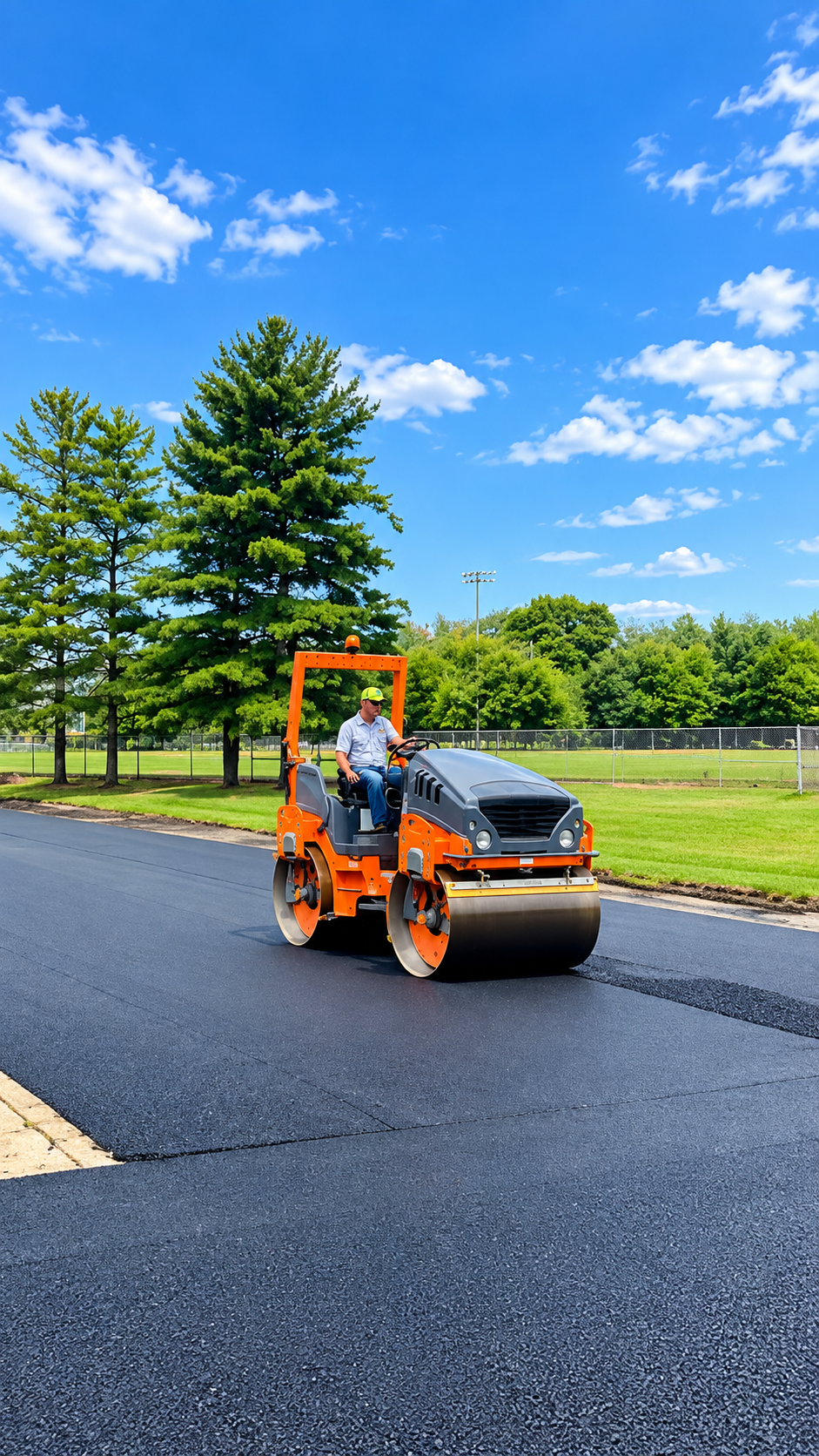
Parking lot paving is the process of constructing or improving a paved parking surface using asphalt to create a smooth, durable, and functional area for vehicle traffic and parking. Asphalt parking lots are commonly used for commercial buildings, retail centers, offices, apartment communities, industrial facilities, schools, and other high-traffic properties. A professionally paved lot can improve accessibility, appearance, traffic flow, and the overall usability of a property.
The parking lot paving process typically begins with evaluating the site, preparing the ground, establishing proper grades, and installing a stable aggregate base. Drainage is an important consideration because the surface should direct rainwater toward appropriate drainage areas rather than allowing water to collect on the pavement. Once the base has been properly prepared and compacted, asphalt is placed at the required thickness and compacted to create a strong and even parking surface.
Professional asphalt parking lot paving also considers factors such as expected traffic volume, vehicle types, pavement thickness, entrances, exits, parking layout, and long-term maintenance requirements. After paving is completed, parking lot line striping, pavement markings, sealcoating, crack repair, and routine maintenance can help keep the area organized and protect the asphalt from premature deterioration.
When Is Parking Lot Paving Necessary?
Parking lot paving is necessary when a new commercial property requires a dedicated parking area or when an existing parking surface has become extensively damaged or difficult to maintain. Warning signs can include widespread cracking, recurring potholes, uneven pavement, deteriorated sections, poor drainage, crumbling edges, and areas where water regularly collects. These conditions can affect the appearance and functionality of the entire parking area.
New paving may also be required when a business is expanding its parking capacity, developing a new property, replacing an unpaved lot, or redesigning an existing parking area. A properly planned asphalt parking lot can provide clearly organized spaces for customers, employees, tenants, and visitors while supporting more efficient vehicle movement throughout the property. Proper grading and drainage can also help manage water and reduce unnecessary stress on the pavement.
Not every damaged parking lot requires complete replacement, which is why a professional pavement assessment is important. Factors such as pavement age, crack severity, pothole depth, base condition, drainage, traffic volume, and overall surface deterioration should be evaluated. Depending on these conditions, the appropriate solution may involve asphalt repair, resurfacing, partial replacement, or complete parking lot paving.
What Is Required For Parking Lot Paving?
Successful parking lot paving requires careful planning, proper site preparation, suitable materials, specialized equipment, and attention to drainage and traffic requirements. Before paving begins, the site should be evaluated for soil stability, existing pavement condition, elevations, drainage patterns, parking layout, expected traffic loads, and available space. Local requirements may also affect elements such as accessible parking spaces, drainage, entrances, and pavement markings.
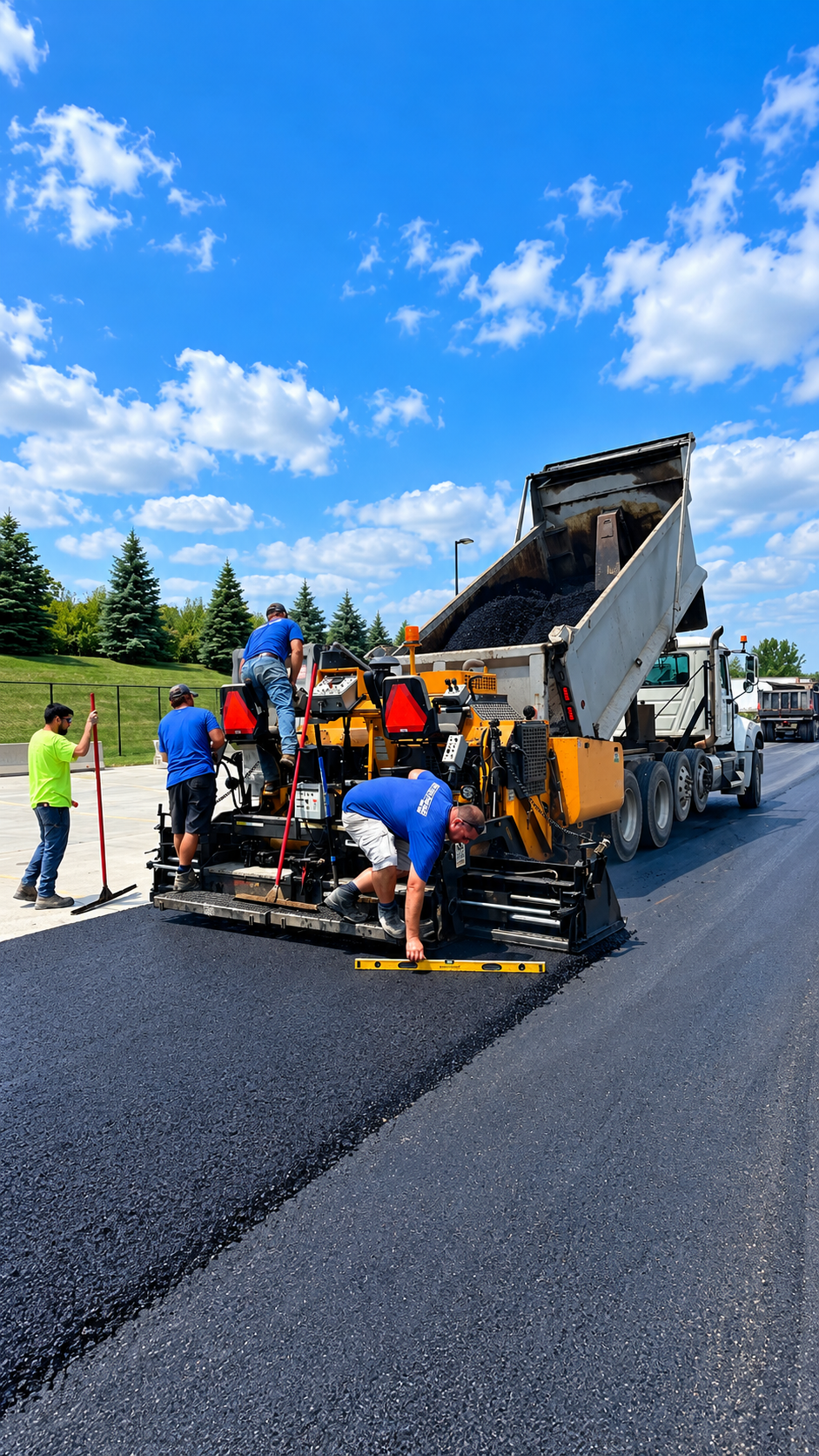
A stable aggregate base is essential for supporting the asphalt surface and regular vehicle traffic. Depending on existing site conditions, excavation may be necessary before the base material is installed, graded, and compacted. Proper slope should also be established to help move water away from the parking surface. Asphalt can then be placed using professional paving equipment and compacted with rollers to achieve the required density, thickness, smoothness, and pavement strength.
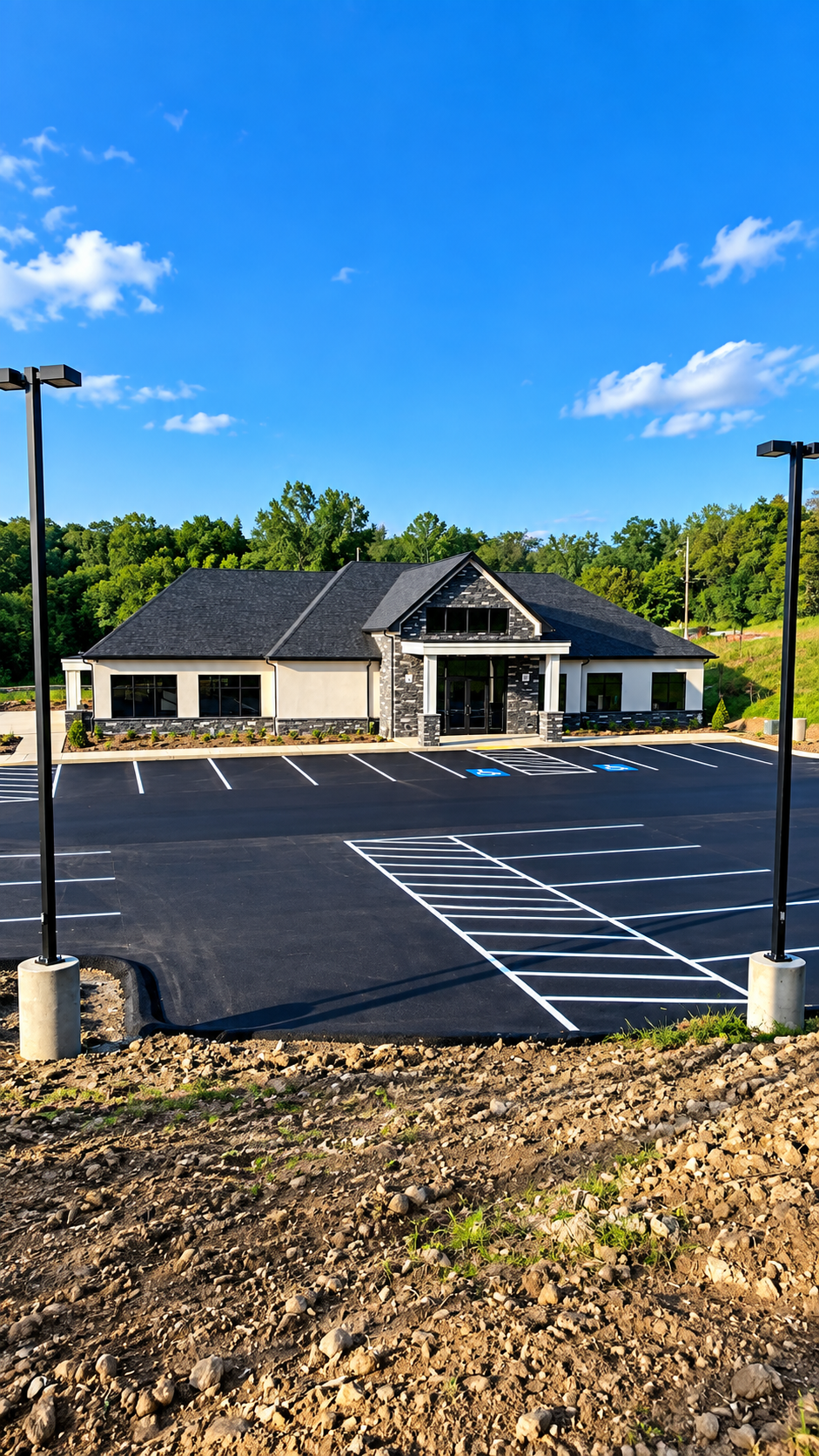
After the asphalt has been installed, the parking area may require line striping and pavement markings to establish parking spaces, directional lanes, loading areas, accessible spaces, pedestrian zones, and other designated areas according to applicable requirements. Long-term care should include routine inspections, crack and pothole repair, drainage maintenance, sealcoating, and restriping when needed to preserve the appearance, organization, and performance of the parking lot.
Our Reviews
What Our Customers Have to Say About Us!
The entire paving process was handled professionally from start to finish. The crew kept the work area organized, communicated clearly, and delivered a smooth, clean asphalt surface. Our parking area looks much better now.

We had several cracks and worn sections throughout our parking lot. The repair work made a noticeable improvement, and the fresh line striping gave the property a cleaner, more professional appearance.
We needed sealcoating and general pavement maintenance, and the process was straightforward and well organized. The asphalt looks refreshed, the surface is much cleaner, and we’re very pleased with the finished result.
The Process
3 Step Process For Your Parking Lot Paving Needs

Contact Us
Start by completing the 'Get a Free Quote' form on our website to share your Parking Lot Paving needs with us.

Schedule Your Estimate
Next, we'll arrange a property visit at a time that works for you to provide an in-person estimate for your Parking Lot Paving needs.

Get The Job Done
After you approve our estimate, we'll schedule a date to complete the job. Our team will work hard to exceed your expectations!
Request A Free Parking Lot Paving Quote
BUSINESS
SERVICES
SERVICE AREAS
OPERATING HOURS
Sun: Closed
Mon: 7:00am - 7:00pm
Tue: 7:00am - 7:00pm
Wed: 7:00am - 7:00pm
Thu: 7:00am - 7:00pm
Fri: 7:00am - 7:00pm
Sat: 7:00am - 7:00pm